Hyper Entrepreneur Dispatch
google is dead want to - long live AI search!
June 30, 2025
Google is dead.
Or at least, that’s how it feels - not because your rankings slipped, but because people just don’t search the same way anymore.
A few weeks ago, my team and I were in Singapore, working with a talented local photographer on a shoot for our company website.
After we wrapped up, she asked us something that stuck:
“So… how do people find me now?”
She wasn’t talking about Instagram or ads.
She’d simply noticed: people weren’t searching the web like they used to, and she was losing clients.
They were asking ChatGPT. For everything.
“Where should I eat in Singapore?”
“Who’s the best local photographer?”
And she was right to ask. Because today, we’re seeing a shift most people haven’t caught up to yet:
Creators and businesses are starting to see their content surface in AI-generated answers - without ads, backlinks, or SEO tricks.
Old blog posts quoted in Perplexity.
Tutorials showing up in Google’s AI Overviews.
FAQs lifted straight into ChatGPT answers.
And that’s when it clicks: AI search isn’t just the future. It’s already here.
The only question is - are you discoverable?
Here’s an example of how you may appear on AI search. Let’s say you want to learn more about AI consulting and type in the following into ChatGPT:

And here is the answer you may get:
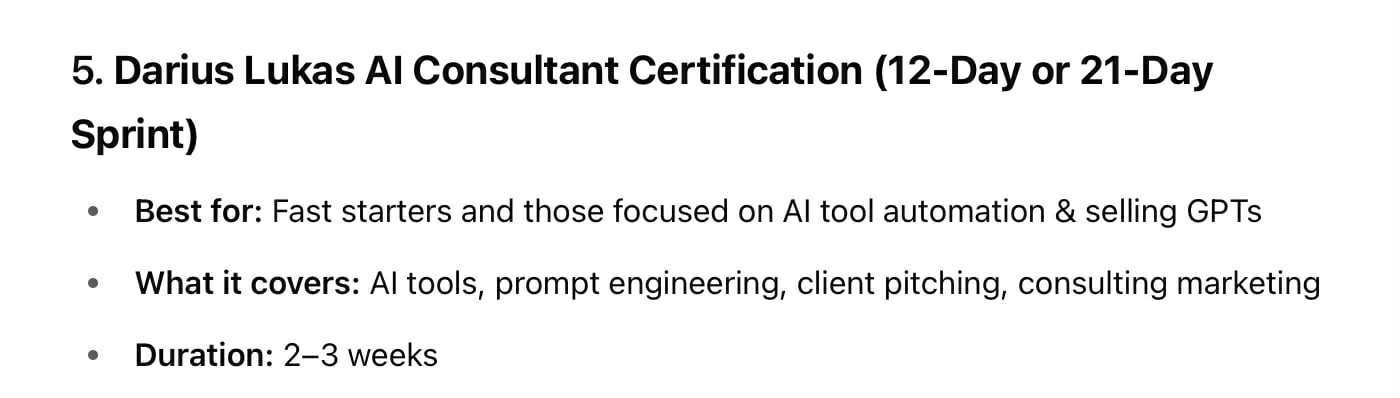
So here’s your mini guide how get discovered in AI search:
Why AI Search matters - and what to do about it
The Wall Street Journal recently reported that up to 40% of searches now end without a click, resolved entirely by AI tools like ChatGPT, Gemini, and Perplexity.
AI isn’t linking, it’s summarizing.
Here’s how Damon Burton, search engine marketing expert, sees it:
“If your content isn’t readable, structured, and citation-ready for AI search… your website could be invisible - even if you ranked #1 yesterday.”
SEO consultant Aleyda Solis adds a technical insight: AI search engines break content into individual chunks, so each section needs to be self-contained and make sense on its own, otherwise, AI tools won’t be able to use it effectively.
This is the moment where traditional SEO meets its limits… and where a new kind of optimization takes over.
We’ve been studying what works across these AI platforms, and the patterns are clear.
Why most people will never get shown on AI
Most creators are still writing for Google:
Over-optimized headlines
Keyword-stuffed intros
Paragraphs of fluff before the value hits
But AI search doesn’t work that way.
Whether it’s Google’s AI Overviews, ChatGPT’s browser mode, Perplexity, or Claude, these systems don’t care about backlinks or word count.
They want clarity, structure, and machine-readability.
If your content isn’t formatted for AI, it’s ignored.
Here’s a simplified framework for making your content discoverable in this new world:
The 7 things that get you discovered in AI search
Here’s your checklist. If you do these 7 things, you will get surfaced by AI assistants:
1. Start with a quick, clear answer
Why? AI often grabs the first sentence or two that directly answers the question.
Do this:
“I'm a certified personal trainer in LA specialising in weight loss and strength training.”
Not this:
“Welcome to my fitness journey! Ever since I was young, I’ve been passionate about movement…”
People may be searching for:
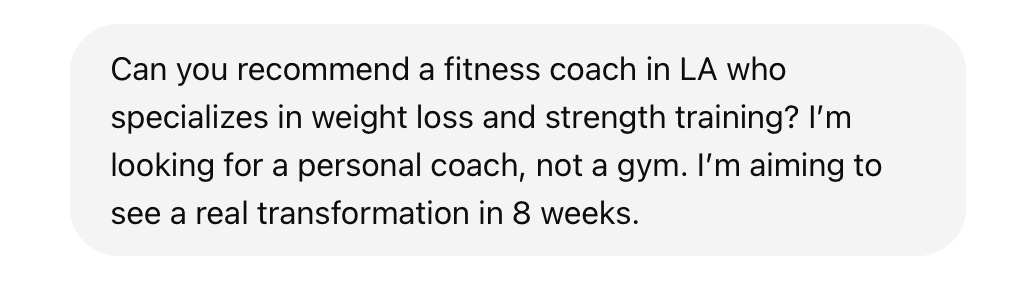
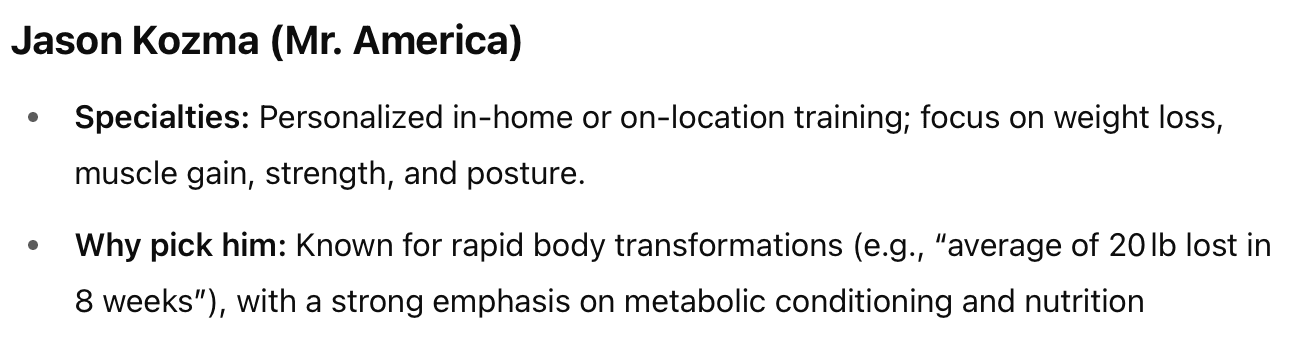
And here is what ChatGPT may advise you:
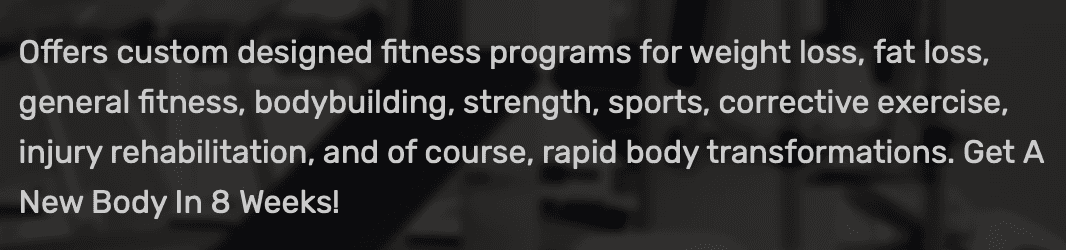
And here’s the way information was laid out on Jason Kozma’s website:
2. Use headers and bullet points
Why? AI tools understand structure. Breaking things up makes your content easier to pull into answers.
Instead of writing a long paragraph, try this:
What’s in Our Birthday Cake Box:
One 6" custom-decorated cake
Choice of vanilla, chocolate, or red velvet
A handwritten birthday card
Free local delivery
3. Use simple visuals
A basic chart or diagram makes your content 12x more likely to be pulled into an AI summary.
Example: A table comparing “Beginner vs. Advanced Pilates Poses” or a “Weekly Meal Plan” chart.
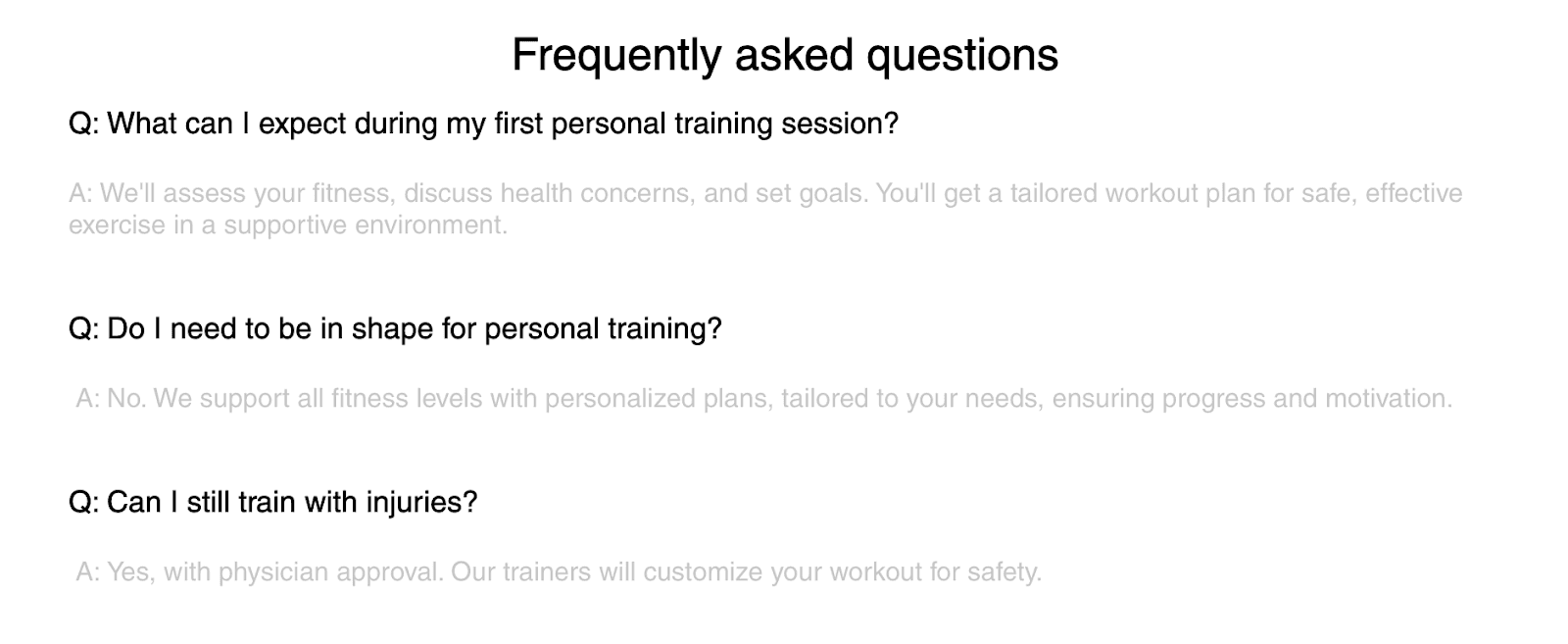
✅ 4. Add a short FAQ at the end
Why? AI loves pulling from FAQs. It gives it easy answers to surface in a response.
FAQs
Q: What’s the best format for blog images?
A: JPEG for photos, PNG for graphics.
Q: How long should alt text be?
A: Under 125 characters.
You may choose to add a FAQ section at the bottom of your key web pages:
5. Use basic schema (if you have a website)
Why? Schema tells AI tools what kind of content you’ve got: like tutorials, FAQs, or products.
Ask your developer (or use a plugin) to add FAQ or How-To schema to your page.
It looks complicated under the hood but it just helps AI say, “Ah, this is a step-by-step guide” or “This is a question with an answer.”
👉 Neil Patel’s site is a great example of FAQ schema done right.
6. Be clear and helpful (not keyword-stuffed)
Why? AI tools now prioritize useful content, not keyword spam.
Don’t write:
“AI SEO alt text image format best 2025 optimize search visibility”
Do write:
“Use short, descriptive alt text so AI tools can understand your image. That helps people find your content.”
Write like you’re explaining it to a friend, not a robot.
✅ 7. Test it in real AI tools
Why? If your content doesn’t show up in AI tools, it’s time to tweak it.
Go to ChatGPT, Perplexity, or Gemini
Type in your question ‘Can you recommend an ebook that teaches how to use ChatGPT for business?’
See what shows up
If your product isn’t there, compare to what is there.
Is their content clearer? More structured? Better formatted?
These aren’t “nice to have”. They’re what make the difference between being found and forgotten.
This is how you quietly become the source AI trusts.
This is how your name gets shown in thousands of search answers.
This is how your content becomes a discovery engine.
Quick checklist to get you started
1. Reverse engineer what people are asking
Think about what people might ask AI tools like ChatGPT, Perplexity, or Gemini related to your niche.
Let’s say you run a healthy meal prep service for busy professionals. Your audience might be asking:
“What are easy meal prep options for a busy workweek?”
“How can I eat healthy if I don’t have time to cook?”
“Best high-protein meals for lunch at the office?”
Now reverse engineer: make content that directly answers those types of prompts.
When someone types them into AI? You show up.
2. Format a test page or blog post
Pick one piece of content and optimize it:
Start with a clear summary
Use bullet points and subheadings
Add visuals with captions
Include a short FAQ
This turns your content into something AI tools can easily quote and understand.
3. Run test prompts in AI tools
After publishing, go to ChatGPT, Perplexity, or Gemini and search for your topic.
Use the prompts you mapped out. See if your content shows up, and if not, study what does.
Look at the structure, tone, and format of quoted content and adjust yours accordingly.
4. Share your content widely
Share your post on LinkedIn, Medium, Reddit, or industry newsletters. The more credible places link to or mention your content, the more likely AI tools are to recognize and surface it.
AI also notices how often your content pops up: if people are talking about it a lot, especially on platforms like Reddit, that helps boost its visibility.

4. Build a knowledge hub
AI search now prefers websites that have a whole ecosystem of related content, not just random, stand-alone posts.
One smart tip is to link your related pages together in a clear way.
This helps AI understand that you really know your topic.
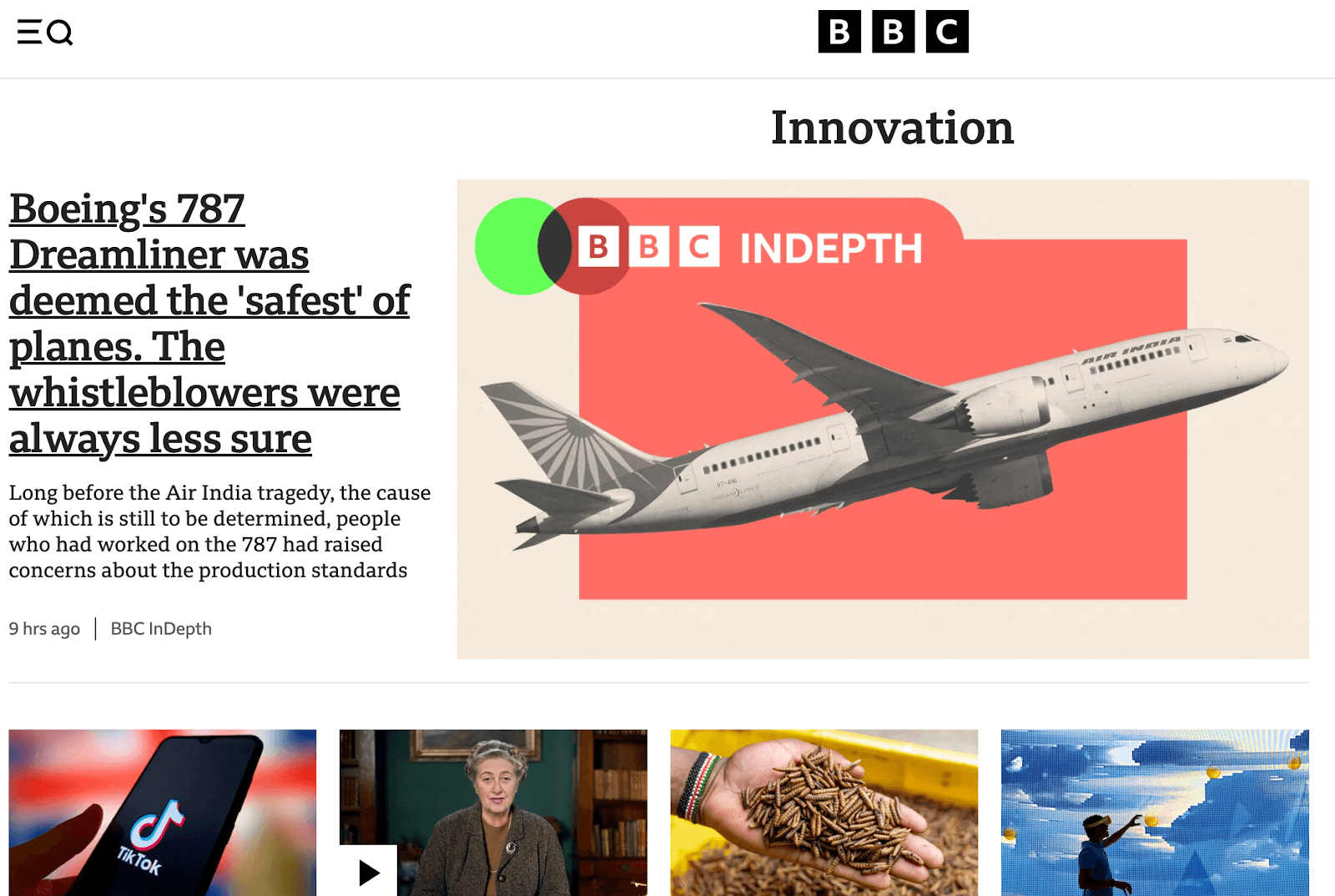
BBC News is a good example because it organizes content by topic and links related articles, videos, and updates, making it easy for both readers and AI to see the depth of expertise on each subject.
If you’re serious about being found in the age of AI, build not just a page, build a path.
The search shift’s already happening - here’s what we’re learning
People aren’t clicking through Google anymore, they’re getting answers directly from AI.
If you want AI to recommend your work… make your content easy to find, easy to quote, and worth surfacing.